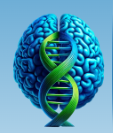
At the Heraclitus Research and Analysis Center (CPAH), especially within the scope of our RG-TEA project research, we reject behavioral romanticization. The mind does not float in a vacuum; it is heavily anchored in structural biology. Autism Spectrum Disorder (ASD) is not merely an exotic personality trait to be overcome with pedagogy alone. It is a reality of neuronal wiring, relentless energy consumption, and cascades of molecular signaling that operate under strict rules of cause and effect.
To understand how the brain of an autistic person operates, it is imperative to move beyond superficial clinical observation and dissect the organ’s engine room.
1. The Architecture of the Wiring: Hyperconnectivity and Synaptic Pruning Failure
During embryonic neurodevelopment and the first years of life, the neurotypical brain undergoes a process of selective apoptosis—a “synaptic pruning” that eliminates redundant connections to optimize system efficiency. In the autistic brain, we observe a laboratory dysregulation of this mechanism. The result is an organ characterized by hyperconnectivity in local networks and hypoconnectivity in long-distance networks.
This means that detail is captured in high resolution, but the integration of the broader context is lost. Structures such as the prefrontal cortex and the amygdala (primary regulator of the limbic system) begin to operate under constant excitatory noise, limiting executive flexibility. Social difficulty is not an intentional failure, but an adaptation of a brain strangled by microscopic data.
2. The Genomic Imperative in the Synaptic Cleft
The mechanistic root of this wiring deviation lies in the allelic and genomic basis. Evidence suggests that the development of psychiatric and neurocognitive disorders, such as autism, is based on the molecular biology of structural genes. A basic example is the NPTN gene, which encodes neuroplastin, a transmembrane protein essential for cell interaction and the effectiveness of synaptic plasticity.
A variation in the expression of this gene directly affects how neurons communicate in the synaptic cleft. Unpruned hyperconnectivity results in a deficit in the homeostasis of the Glutamate/GABA axis (excitation versus inhibition). The autistic brain, due to its protein and genetic architecture, is perpetually on the verge of electrochemical overstimulation.
3. The Thermodynamics of Meltdown: The Electrophysiological Collapse
Where there is an excess of synaptic firing and unpruned local neural networks, the brain exacts an extortionate thermodynamic toll. The autistic circuitry demands a metabolic rate that systematically operates at its limit. Each avalanche of sensory stimuli or break in environmental logic triggers uninterrupted action potentials, requiring a massive cleavage of ATP by neuronal mitochondria.
This energy is vital to sustain the work of the sodium-potassium pump (Na+/K+-ATPase), which frantically struggles to restore the electrochemical gradient and repolarize the neuronal cell membrane. When the environmental load is excessive, saturation of the ion channels occurs, and the phosphorylation capacity is restricted. The network short-circuits.
What society, in layman’s terms, calls an emotional crisis or meltdown, neuroscientists know is a transient mechanical and electrophysiological collapse. It’s not a tantrum; it’s the energy failure of a nervous system that has completely exhausted its cellular currency and needs to “reboot” to avoid structural damage.
The Exact Conclusion:
True cognitive empathy requires metrics and anatomical knowledge. If the autistic brain has a distinct thermodynamic processing ceiling, imposed by genetic and structural variants, interventions and social interaction should not force the system to overheat. Real solutions are based on adapting the environment so that an individual’s ATP expenditure is entirely directed towards their cognition and potential genius, and not wasted in a futile struggle to process the disorganized noise of the modern world. Understanding the spectrum is, first and foremost, understanding biology, physics, and applied chemistry.